Patient Search
 |
 |
|
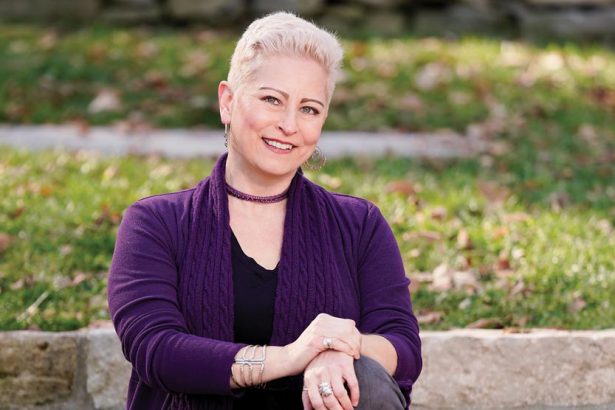
KaCrole Higgins was diagnosed with breast cancer in 2020. “In May 2020, I found a lump in my breast. I cried. By June, it was diagnosed as breast cancer, triple positive, stage 1A. While getting this cancer diagnosis was devastating, it also became an opportunity. Suddenly, the cancer gave me clarity. It gave me clarity about what was important, what was good in my life, what was toxic in my life, and what I needed to do.” Click below to read more of KaCrole’s story |
If Landon Ryan had been diagnosed with bilateral retinoblastoma 10, 20 or 30 years ago, she might not be here today with nearly perfect vision.Thanks to recent improvements in the treatment for this rare form of cancer that almost exclusively affects children under the age of 5, the diagnosis had the power to change Landon’s life when she was 11 months old, but not to take it — or her eyesight. Click below to learn more about Landon and her story. https://momentum.vicc.org/2022/04/brighter-outlook/ |
Testing Longer Duration Radiation Therapy Versus the Usual Radiation Therapy in Patients With Cancer That Has Spread to the Brain
Neuro-Oncology
Neuro-Oncology
This phase III trial compares the effectiveness of fractionated stereotactic radiosurgery (FSRS) to usual care stereotactic radiosurgery (SRS) in treating patients with cancer that has spread from where it first started to the brain. Radiation therapy uses high energy x-rays to kill tumor cells and shrink tumors. FSRS delivers a high dose of radiation to the tumor over 3 treatments. SRS is a type of external radiation therapy that uses special equipment to position the patient and precisely give a single large dose of radiation to a tumor. FSRS may be more effective compared to SRS in treating patients with cancer that has spread to the brain.
Neuro-Oncology
III
Cmelak, Anthony
NCT06500455
NRGNEUBN013