Patient Search
 |
 |
|
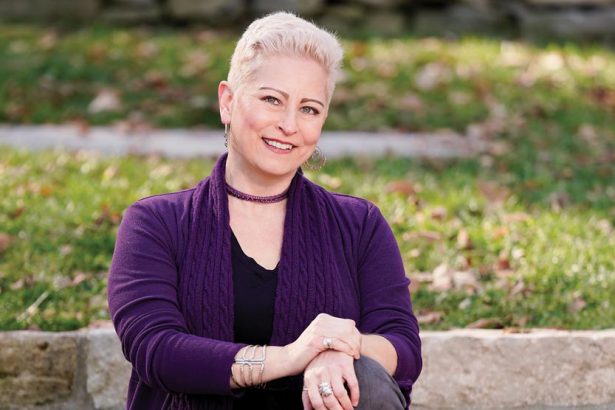
KaCrole Higgins was diagnosed with breast cancer in 2020. “In May 2020, I found a lump in my breast. I cried. By June, it was diagnosed as breast cancer, triple positive, stage 1A. While getting this cancer diagnosis was devastating, it also became an opportunity. Suddenly, the cancer gave me clarity. It gave me clarity about what was important, what was good in my life, what was toxic in my life, and what I needed to do.” Click below to read more of KaCrole’s story |
If Landon Ryan had been diagnosed with bilateral retinoblastoma 10, 20 or 30 years ago, she might not be here today with nearly perfect vision.Thanks to recent improvements in the treatment for this rare form of cancer that almost exclusively affects children under the age of 5, the diagnosis had the power to change Landon’s life when she was 11 months old, but not to take it — or her eyesight. Click below to learn more about Landon and her story. https://momentum.vicc.org/2022/04/brighter-outlook/ |
Study of Arlocabtagene Autoleucel (BMS-986393) a GPRC5D-directed CAR T Cell Therapy in Adult Participants With Relapsed or Refractory Multiple Myeloma
Multiple Myeloma
Multiple Myeloma
The purpose of this study is to evaluate the effectiveness and safety of Arlocabtagene Autoleucel (BMS-986393) in participants with relapsed or refractory multiple myeloma.
Multiple Myeloma
II
Baljevic, Muhamed
NCT06297226
VICC-DTCTT23527
Testing the Use of Neratinib or the Combination of Neratinib and Palbociclib Targeted Treatment for HER2+ Solid Tumors (A ComboMATCH Treatment Trial)
Multiple Cancer Types
This phase II ComboMATCH treatment trial compares the effect of neratinib to the combination of neratinib and palbociclib in treating patients with HER2 positive solid tumors. Neratinib and palbociclib are in a class of medications called kinase inhibitors. They work by blocking the action of an abnormal protein that signals cancer cells to multiply. This helps slow or stop the spread of tumor cells. Giving neratinib and palbociclib in combination may shrink or stabilize cancers that over-express a specific biomarker called HER2.
Bladder,
Cervical,
Colon,
Esophageal,
GIST,
Gastric/Gastroesophageal,
Gastrointestinal,
Head/Neck,
Liver,
Lung,
Non Small Cell,
Ovarian,
Rectal,
Urologic,
Uterine
II
Choe, Jennifer
NCT06126276
ECOGMDEAY191-N5
A Study of FG-3246 in Participants With Metastatic Castration-Resistant Prostate Cancer (mCRPC)
Prostate
Prostate
The purpose of this study is to evaluate the safety, efficacy, tolerability, and pharmacokinetics (PK) of FG-3246, a cluster of differentiation 46 (CD46) targeting antibody-drug conjugate (ADC), in the treatment of participants with mCRPC who have progressed following treatment with one prior second-generation androgen receptor signaling inhibitor (ARSI) in any setting and no prior taxane therapy in the mCRPC setting.
Prostate
II
Schaffer, Kerry
NCT06842498
VICCURO24538
Testing Lutetium Lu 177 Dotatate in Patients With Somatostatin Receptor Positive Advanced Bronchial Neuroendocrine Tumors
Lung
Lung
This phase II trial studies the effect of lutetium Lu 177 dotatate compared to the usual treatment (everolimus) in treating patients with somatostatin receptor positive bronchial neuroendocrine tumors that have spread to other places in the body (advanced). Lutetium Lu 177-dotate is a radioactive drug. It binds to a protein called somatostatin receptor, which is found on some neuroendocrine tumor cells. Lutetium Lu 177-dotatate builds up in these cells and gives off radiation that may kill them. It is a type of radioconjugate and a type of somatostatin analog. Lutetium Lu 177 dotatate may be more effective than everolimus in shrinking or stabilizing advanced bronchial neuroendocrine tumors.
Lung
II
Ramirez, Robert
NCT04665739
SWOGTHOA021901
A Study of Combination Chemotherapy for Patients With Newly Diagnosed DAWT and Relapsed FHWT
Multiple Cancer Types
This phase II trial studies how well combination chemotherapy works in treating patients with newly diagnosed stage II-IV diffuse anaplastic Wilms tumors (DAWT) or favorable histology Wilms tumors (FHWT) that have come back (relapsed). Drugs used in chemotherapy regimens such as UH-3 (vincristine, doxorubicin, cyclophosphamide, carboplatin, etoposide, and irinotecan) and ICE/Cyclo/Topo (ifosfamide, carboplatin, etoposide, cyclophosphamide, and topotecan) work in different ways to stop the growth of tumor cells, either by killing the cells, by stopping them from dividing, or by stopping them from spreading. This trial may help doctors find out what effects, good and/or bad, regimen UH-3 has on patients with newly diagnosed DAWT and standard risk relapsed FHWT (those treated with only 2 drugs for the initial WT) and regimen ICE/Cyclo/Topo has on patients with high and very high risk relapsed FHWT (those treated with 3 or more drugs for the initial WT).
Pediatrics,
Wilms / Other Kidney (Pediatrics)
II
Benedetti, Daniel
NCT04322318
COGAREN1921
Consolidation of First-Line MRD+ Remission With Cema-cel in Patients With LBCL
Lymphoma
Lymphoma
This is a randomized, open-label study in adult patients who have completed standard first line therapy for large B-cell lymphoma (LBCL) and achieved a complete response or partial response suitable for observation, but who have minimal residual disease (MRD) as detected by the Foresight CLARITY Investigational Use Only (IUO) MRD test, powered by PhasED-Seq. The purpose of the trial is to assess the efficacy and safety of consolidation with cemacabtagene ansegedleucel (cema-cel), an allogeneic CD19 CAR T product, as compared to standard of care observation.
In this study, participants with MRD are randomized 1:1 to treatment with cema-cel or an observation arm. Treatment includes cema-cel following a lymphodepletion regimen of fludarabine and cyclophosphamide.
Prior to August 2025, participants may also have received an anti-CD52 monoclonal antibody, ALLO-647, as part of their lymphodepletion regimen.
In this study, participants with MRD are randomized 1:1 to treatment with cema-cel or an observation arm. Treatment includes cema-cel following a lymphodepletion regimen of fludarabine and cyclophosphamide.
Prior to August 2025, participants may also have received an anti-CD52 monoclonal antibody, ALLO-647, as part of their lymphodepletion regimen.
Lymphoma
II
Jallouk, Andrew
NCT06500273
VICC-DTCTT24008
A Study With Tovorafenib (DAY101) as a Treatment Option for Progressive, Relapsed, or Refractory Langerhans Cell Histiocytosis
This phase II trial tests the safety, side effects, best dose and activity of tovorafenib (DAY101) in treating patients with Langerhans cell histiocytosis that is growing, spreading, or getting worse (progressive), has come back (relapsed) after previous treatment, or does not respond to therapy (refractory). Langerhans cell histiocytosis is a type of disease that occurs when the body makes too many immature Langerhans cells (a type of white blood cell). When these cells build up, they can form tumors in certain tissues and organs including bones, skin, lungs and pituitary gland and can damage them. This tumor is more common in children and young adults. DAY101 may stop the growth of cancer cells by blocking some of the enzymes needed for cell growth. Using DAY101 may be effective in treating patients with relapsed or refractory Langerhans cell histiocytosis.
Not Available
II
Not Available
NCT05828069
VICC-NTPED24012
A Study of a New Way to Treat Children and Young Adults With a Brain Tumor Called NGGCT
Multiple Cancer Types
This phase II trial studies the best approach to combine chemotherapy and radiation therapy (RT) based on the patient's response to induction chemotherapy in patients with non-germinomatous germ cell tumors (NGGCT) that have not spread to other parts of the brain or body (localized). This study has 2 goals: 1) optimizing radiation for patients who respond well to induction chemotherapy to diminish spinal cord relapses, 2) utilizing higher dose chemotherapy followed by conventional RT in patients who did not respond to induction chemotherapy. Chemotherapy drugs, such as carboplatin, etoposide, ifosfamide, and thiotepa, work in different ways to stop the growth of tumor cells, either by killing the cells, by stopping them from dividing, or by stopping them from spreading. Radiation therapy uses high energy x-rays or high-energy protons to kill tumor cells and shrink tumors. Studies have shown that patients with newly-diagnosed localized NGGCT, whose disease responds well to chemotherapy before receiving radiation therapy, are more likely to be free of the disease for a longer time than are patients for whom the chemotherapy does not efficiently eliminate or reduce the size of the tumor. The purpose of this study is to see how well the tumors respond to induction chemotherapy to decide what treatment to give next. Some patients will be given RT to the spine and a portion of the brain. Others will be given high dose chemotherapy and a stem cell transplant before RT to the whole brain and spine. Giving treatment based on the response to induction chemotherapy may lower the side effects of radiation in some patients and adjust the therapy to a more efficient one for other patients with localized NGGCT.
Germ Cell (Pediatrics),
Pediatrics
II
Esbenshade, Adam
NCT04684368
COGACNS2021
Testing What Happens When an Immunotherapy Drug (Pembrolizumab) is Given by Itself Compared to the Usual Treatment of Chemotherapy With Radiation After Surgery for Recurrent Head and Neck Squamous Cell Carcinoma
Head/Neck
Head/Neck
This phase II trial studies the effect of pembrolizumab alone compared to the usual approach (chemotherapy \[cisplatin and carboplatin\] plus radiation therapy) after surgery in treating patients with head and neck squamous cell carcinoma that has come back (recurrent) or patients with a second head and neck cancer that is not from metastasis (primary). Radiation therapy uses high energy radiation or protons to kill tumor cells and shrink tumors. Cisplatin is in a class of medications known as platinum-containing compounds. It works by killing, stopping or slowing the growth of cancer cells. Carboplatin is also in a class of medications known as platinum-containing compounds. It works in a way similar to the anticancer drug cisplatin, but may be better tolerated than cisplatin. Carboplatin works by killing, stopping or slowing the growth of cancer cells. Immunotherapy with monoclonal antibodies, such as pembrolizumab, may help the body's immune system attack the cancer and may interfere with the ability of tumor cells to grow and spread. Giving pembrolizumab alone after surgery may work better than the usual approach in shrinking recurrent or primary head and neck squamous cell carcinoma.
Head/Neck
II
Choe, Jennifer
NCT04671667
ECOGHNEA3191
Photobiomodulation in Head and Neck Cancer-Related Chronic Lymphedema
Head/Neck
Head/Neck
The U.S. Food and Drug Administration approved photobiomodulation therapy (PBMT) as a treatment for breast cancer-related arm lymphedema (BCRL) in 2006. The investigators conducted two pilot clinical trials. Results demonstrated the feasibility, acceptability, and preliminary efficacy of PBMT for the treatment of chronic lymphedema in head and neck cancer (HNC) survivors. The objective of this study is to further investigate and confirm the positive effects of PBMT on HNC-related chronic lymphedema.
Head/Neck
II
Murphy, Barbara
NCT06837480
VICCHN25039